Year-End Compliance Checklist for UK SMEs (Before 5 April)
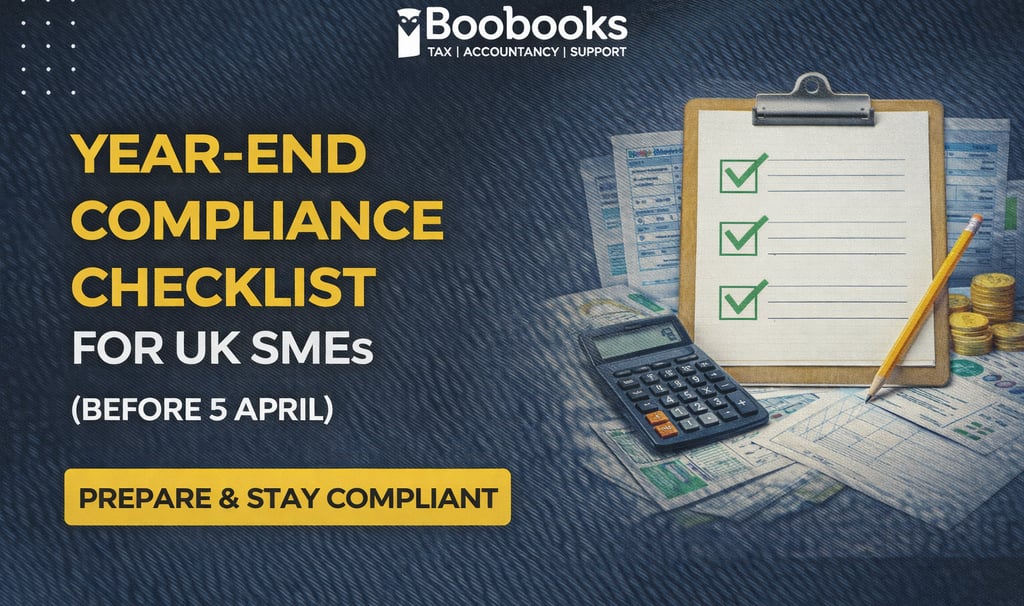
The clock is ticking. With the 5th April tax year ending just around the corner, UK SMEs are entering the most critical period of the financial calendar. Getting your year end compliance right isn't just about avoiding HMRC penalties, it's about closing the books cleanly, starting the new tax year with confidence, and ensuring every pound of profit is accounted for accurately.
Whether you're a sole trader, partnership, or limited company, this year-end compliance checklist will guide you through everything you need to do before the 5th April deadline. Let's get your business ready for a smooth transition into 2026/27.
Why 5th April Matters
For UK taxpayers, 5th April marks the end of the tax year. It's the final date for:
Using annual allowances (ISA, CGT, pension) before they reset
Finalising income and expenses for the year
Making last minute tax efficient moves before the new rules apply
Preparing for end of year reporting to HMRC
Miss this date, and opportunities vanish. Allowances are lost. Tax planning options close. And the pressure of catching up only grows.
Your Pre-5th April Compliance Checklist
Work through these steps before the tax year ends.
1. Use Your Annual Allowances (Or Lose Them)
The "use it or lose it" principle applies to several key allowances:
ISA Allowance: £20,000 per adult. If you haven't used it, you have until 5th April to contribute. Once the new tax year starts, last year's allowance is gone.
Pension Annual Allowance: £60,000 (or your relevant earnings, if lower). Personal pension contributions reduce your taxable income for the year
Capital Gains Tax (CGT) Allowance: £3,000. If you're sitting on gains, consider selling assets to use this allowance before it resets.
Dividend Allowance: £500. Beyond this, dividends are taxable. Plan your extraction accordingly.
Action: Check your usage of each allowance. Make contributions or disposals now, not later.
2. Finalise Your Income and Expenses
Ensure all income and expenses for the 2025/26 tax year are captured correctly.
Review Bank Statements: Go through all business accounts and ensure every transaction is categorised.
Capture Missing Receipts: That coffee with a client? The software subscription? Gather any outstanding receipts and log them.
Prepay Expenses: If you know you'll incur costs early in the new year (like professional subscriptions or insurance), consider paying them before 5th April to claim the expense in this tax year.
Accrue for Known Liabilities: If you have invoices due but not yet paid, ensure they're recorded as liabilities.
Action: Run a final profit and loss report for the year. Does it reflect your true trading position?
3. Review Director's Remuneration (For Limited Companies)
If you're a director of a limited company, how you pay yourself matters.
Salary vs Dividends: Review the split for the year. Is it tax-efficient? Have you taken a salary up to the NIC threshold (£12,570) to protect state pension entitlement?
Pension Contributions: Company pension contributions are a deductible expense. Consider making a contribution before year end to reduce Corporation Tax liability.
Loan Account: If you owe money to the company or the company owes you, ensure loan accounts are properly documented.
Action: Calculate your total remuneration for the year and assess its tax efficiency.
4. Claim All Allowable Expenses
Many business owners miss legitimate expenses. Now is the time to check.
Commonly missed expenses for UK SMEs
Use of Home as Office: A simplified expense claim for working from home (currently £6 per week without receipts).
Mileage: 45p per mile for the first 10,000 business miles.
Professional Subscriptions: Many trade bodies and professional organisations qualify for tax relief.
Training and Development: Courses directly related to your business are allowable.
Business Gifts: Gifts to customers costing less than £50 per person per year (and not food, drink, or tobacco) are deductible.
Bad Debts: If a customer has defaulted and you've taken reasonable steps to recover the debt, you can claim it as an expense.
Action: Review HMRC's list of allowable expenses or ask your accountant to check your claims.
5. Check Your Payroll Year-End
If you employ staff, the payroll year ends on 5th April too
Final FPS: Ensure your final Full Payment Submission for 2025/26 has been submitted, marked as the final submission for the year.
P60s: Prepare to issue P60s to all employees by 31st May 2026.
Benefits and Expenses: Gather data for P11D reporting (deadline 6th July 2026). This includes company cars, private medical insurance, and other taxable benefits.
Pay HMRC: Any outstanding PAYE and NIC for the year must be paid by 22nd April 2026.
Action: Run a payroll year-end report and verify all submissions are complete.
6. Prepare for Making Tax Digital (MTD)
MTD for Income Tax is now in effect for sole traders and landlords with income above £50,000 (and will extend to those with income above £30,000 from April 2026).
MTD Compliance: Ensure you're using MTD compliant software to submit quarterly updates.
Quarterly Updates: If you're within MTD, your final quarterly update for the year must be submitted within one month of 5th April.
Final Declaration: After 5th April, you'll make your final declaration to HMRC, confirming your year end figures.
Action: Check you're using compatible software and that all quarterly submissions are up to date.
7. Review Your Tax Position for the Year
Before the year ends, calculate your estimated tax liability.
Income Tax: Based on your profit, what will you owe?
Corporation Tax: For limited companies, what's your estimated liability for the accounting period ending in 2025/26?
Payments on Account: If you're a sole trader or partner, remember that your January 2027 tax bill will include a payment on account for 2026/27.
Action: Set aside funds in a separate savings account now, so you're not caught short when the bills arrive.
8. Document Everything for Your Accountant
If you work with an accountant, they need complete information to prepare your year end accounts and tax returns.
Gather All Records: Bank statements, invoices, receipts, loan agreements, dividend vouchers.
Note One-Off Items: Highlight any unusual transactions, large purchases, asset sales, or changes in business structure.
Share Your Goals: Let your accountant know your plans for the coming year. This helps them provide forward looking advice.
Action: Schedule a meeting with your accountant before 5th April to review your year end position.
Quick Reference: Key April Dates
Date What's Happening
5th April 2025/26 tax year ends. Allowances reset.
6th April 2026/27 tax year begins. New rates apply.
19th April Deadline for postal payments to HMRC for 2025/26 tax year.
22nd April Deadline for electronic payments to HMRC for 2025/26 tax year.
31st May Deadline to give P60s to employees.
6th July Deadline to file P11Ds and P11D(b).
Don't Let the Deadline Catch You Out
The 5th April deadline comes around every year, but it never feels any less urgent. The difference between a smooth year-end and a stressful scramble comes down to one thing: preparation.
At Boobooks Accounting, we help UK SMEs navigate year-end with confidence. From reviewing your tax position to ensuring payroll compliance and MTD readiness, we make sure nothing is missed, no allowances are wasted, and you start the new tax year on solid ground.
Upgrade your bookkeeping systems.
Book your year-end compliance review with our team today.
Get in touch
UK Office
251 Grays Inn Rd, London WC1X 8QT, United Kingdom
UAE Office
Meydan Grandstand , Al Meydan road , Nadd Al Shiba first, Dubai-UAE
Pakistan Office
380, Main Potohar Road, Islamabad
Contacts
© Boobooks is a trading name of Hudsons Consulting Ltd, registered in England and Wales (Company No. 08659966)