How Rising Energy and Import Costs Are Impacting UK SME Profits
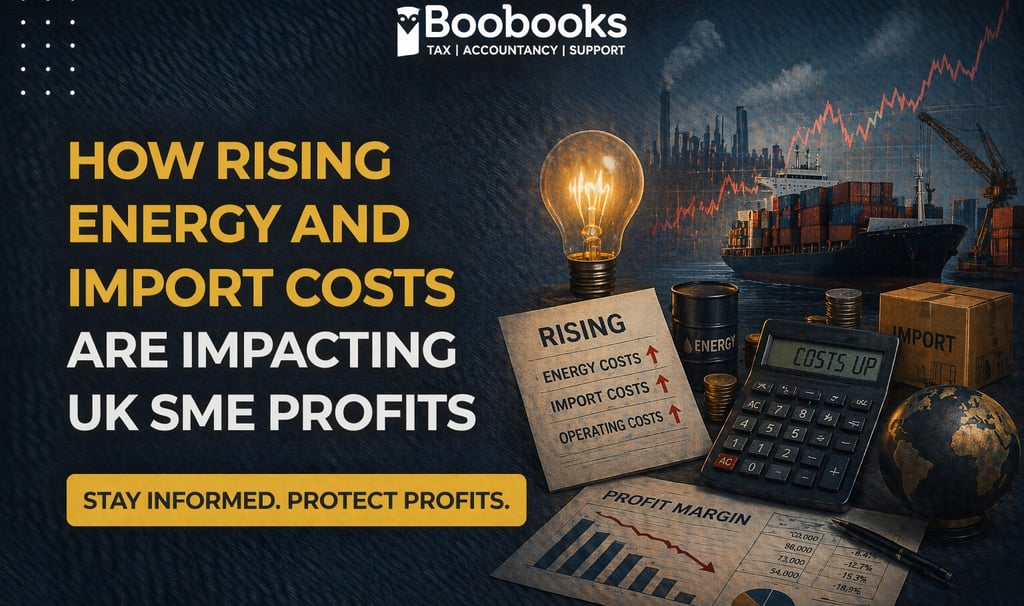

If your profit margins feel thinner this year, you're not alone. Across the UK, small and medium sized businesses are facing a two pronged squeeze: energy bills that refuse to stabilize and import costs that keep climbing. For many, the cumulative effect is the difference between a healthy bottom line and a worrying one.
These aren't temporary blips. Global conflicts, supply chain realignments, and currency fluctuations have created a new normal where volatility is the rule, not the exception. Understanding how rising energy costs for UK businesses and increasing import costs in the UK affect your specific operation is the first step toward protecting what you've built.
The Energy Cost Challenge
For many SMEs, energy is no longer a fixed overhead, it's a moving target that can swing your monthly profit and loss statement dramatically.
Manufacturing businesses feel it in every production run. Retailers see it in heating, lighting, and refrigeration. Hospitality venues struggle with kitchens, laundry, and customer comfort. Even office based businesses aren't immune, with heating, cooling, and IT infrastructure all demanding power.
The problem isn't just higher prices. It's unpredictable. A fixed price contract offers some protection, but when it expires, the renewal rate can be a shock. Variable-rate customers live with constant uncertainty. And standing charges, the daily fee just for being connected, have risen across most regions, affecting even businesses that use minimal energy.
What makes this particularly painful is that energy isn't optional. You can't simply decide to use less on a freezing day. You can't turn off refrigeration in a restaurant. For many businesses, energy is a non negotiable cost of staying open.
The Import Cost Squeeze
If your business relies on imported goods, whether raw materials, components, or finished products, you've likely noticed a steady creep in what you pay.
Several forces are at play here. Global shipping routes remain disrupted, with freight costs significantly higher than pre crisis levels. Container rates, port delays, and vessel availability all feed into the final price you pay. Currency movements add another layer. When the pound weakens against the dollar or the euro, every overseas purchase becomes more expensive in sterling terms.
Then there are the cascading effects. Even if you don't import directly, your UK-based suppliers probably do. Their increased costs get passed down the chain. A British manufacturer buying UK steel might still feel the impact of global iron ore prices and international shipping rates embedded in that steel.
For small businesses, this is especially challenging because you have less negotiating power. Large corporations can lock in long term contracts at favourable rates. SMEs often pay closer to spot prices, leaving them exposed to every market wobble.
How These Costs Eat Into Your Profits
The maths is brutal but simple. If your costs rise faster than your prices, your margins shrink. And raising prices isn't always straightforward.
Some customers are price sensitive. A café that increases its coffee price by 50p might lose a percentage of its regulars. A retailer bumping prices on imported goods might see shoppers look elsewhere. There's a limit to what the market will bear.
But here's what many business owners miss: you don't have to absorb all of the increase. You don't have to pass all of it on either. The key is understanding exactly where your costs are rising and by how much, then making intentional decisions about pricing, efficiency, and cost control.
Practical Steps to Protect Your Profits
You can't control global energy markets or shipping routes. But you can control how your business responds. Here are five practical moves to consider.
1. Audit Your Energy Usage
You'd be surprised how much energy is wasted without anyone noticing. Old equipment running inefficiently. Lights left on overnight. Heating empty rooms. A proper energy audit, even a simple one done internally often reveals quick wins.
Start by reviewing your bills. Understand your unit rates and standing charges. Then walk through your premises. Where is energy being used? Where is it being wasted? Simple measures like LED lighting, timer switches, and better insulation pay for themselves surprisingly quickly.
2. Review Your Supplier Base
If one of your key suppliers has raised prices, ask why. Is the increase justified by their costs? Could another supplier offer better terms? Sometimes loyalty costs more than it's worth.
For imported goods specifically, consider whether alternative sourcing is possible. Is there a UK based supplier? Could you source from a different region with more stable pricing? Diversifying your supply chain reduces your exposure to any single point of disruption.
3. Build Cost Escalation into Your Pricing
This is uncomfortable for many business owners, but it's essential. Your prices should reflect your costs. If your costs have risen permanently, your prices may need to rise permanently too.
The key is communication. Explain to customers why prices are changing. Frame it as maintaining quality and service, not profiteering. Most customers understand that businesses face rising costs, they face them too.
4. Strengthen Your Cash Flow Forecasting
Rising costs make cash flow forecasting more important, not less. You need to see problems coming before they arrive.
Build a forecast that includes your best estimate of energy and import costs for the next six months. Then stress-test it. What if energy rises another 20 per cent? What if your main imported component becomes 30 per cent more expensive? Knowing your exposure lets you plan responses in advance.
5. Claim Everything You're Entitled To
Many business owners miss legitimate tax reliefs that could offset rising costs. Are you claiming the Annual Investment Allowance on energy efficient equipment? Have you explored enhanced capital allowances for certain technologies? Are you capturing all allowable expenses?
A good accountant doesn't just file your return, they help you keep more of your money.
The Bottom Line
Rising energy and import costs are real. They're affecting businesses across every sector. But they don't have to dictate your profitability. With clear visibility, strategic planning, and the right advice, you can protect your margins, adjust your pricing intelligently, and build a business that's resilient enough to weather whatever comes next.
At Boobooks Accounting, we help UK SMEs understand their cost drivers, forecast accurately, and make informed decisions about pricing and efficiency. We don't just look at your past, we help you plan for the future.
Protect your margins with better financial planning.
Book a free cost review today.
Get in touch
UK Office
251 Grays Inn Rd, London WC1X 8QT, United Kingdom
UAE Office
Meydan Grandstand , Al Meydan road , Nadd Al Shiba first, Dubai-UAE
Pakistan Office
380, Main Potohar Road, Islamabad
Contacts
© Boobooks is a trading name of Hudsons Consulting Ltd, registered in England and Wales (Company No. 08659966)